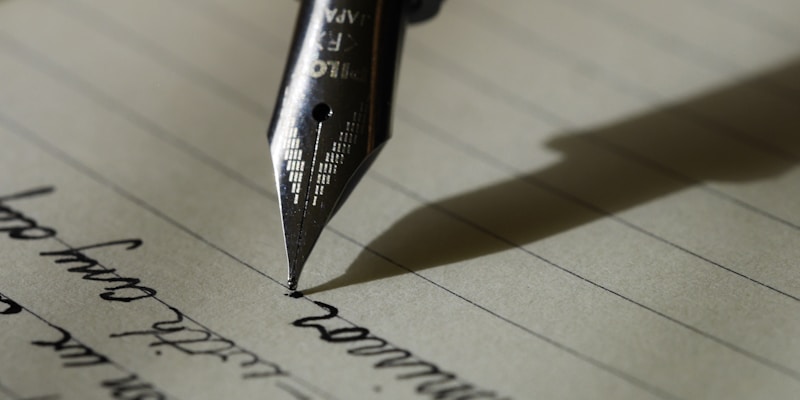
Remember the last time you checked your mailbox and found something that was not a bill, a catalog, or a political mailer? If you have to think about it, you are not alone. Most adults have not received a personal letter in months -- or years. The mailbox has become a chore, a stack of obligations. Nobody looks forward to checking it anymore.
A pen pal tradition changes that. It puts something in your mailbox that you actually want to find. And it gives you something increasingly rare in adult life: a relationship built on long-form, thoughtful, uninterrupted communication rather than fragmented texts and half-read group chats.
Starting a pen pal practice as an adult is simpler than you think. Here is how to find someone to write to, what to write about, how to make it stick, and why adding a wax seal to each letter transforms the exchange from correspondence into ceremony.
Finding a Pen Pal as an Adult
The biggest barrier is the first one: who do you write to? As a child, pen pals were assigned by teachers. As an adult, you have to find your own. Here are the best options:
Start with Someone You Already Know
The easiest pen pal is a friend or family member who lives at a distance. You already have a relationship, shared context, and things to talk about. The transition from texting to letter writing is straightforward: "I want to start writing actual letters. Would you be up for exchanging one a month?"
Many people find that a letter-writing relationship with an existing friend unlocks a depth of conversation that their text-based communication never reached. Something about the format -- the length, the privacy, the permanence -- invites a different kind of honesty.
Pen Pal Matching Apps and Websites
Several platforms exist specifically for connecting adult pen pals:
- Slowly -- A digital pen pal app that simulates the experience of physical mail. Letters take time to "deliver" based on the geographical distance between correspondents. Many users transition from the app to actual postal mail once a connection is established.
- PenPal World -- One of the largest pen pal matching communities, with users in over 200 countries. You create a profile describing your interests and the kind of correspondence you are looking for, and browse profiles of potential matches.
- International Pen Friends (IPF) -- Operating since 1967, IPF matches pen pals based on age, gender, and interests. It is one of the oldest organized pen pal services in the world.
- Reddit r/penpals -- An active community of thousands of people posting pen pal requests. You can find correspondents interested in specific topics, age ranges, locations, or correspondence styles.
Niche Communities
If you have a specific interest -- literature, gardening, language learning, board games, a particular fandom -- there is likely a community within it that includes letter writers. Book clubs, craft groups, and hobby forums often have members who would welcome a pen pal who shares their passion. The shared interest gives you a built-in topic for your first letter and an ongoing thread for future ones.
Intergenerational Pen Pals
Some of the most rewarding pen pal relationships cross generational lines. Organizations like Letters Against Isolation connect volunteers with elderly individuals in care facilities who receive little personal mail. The correspondence benefits both parties: the older correspondent gets a connection to the outside world, and the younger correspondent gets perspective, stories, and a relationship that exists entirely outside the pressures of social media and professional life.
Establishing a Cadence
The most common reason adult pen pal traditions fail is not loss of interest -- it is the absence of expectations. Without a rhythm, letters get postponed indefinitely. Here is how to set a sustainable pace:
Monthly Is the Sweet Spot
For most adults, one letter per month is the ideal frequency. It is frequent enough to maintain momentum and build a real relationship, but infrequent enough that it does not become a burden. A monthly cadence also gives you enough time to accumulate experiences and thoughts worth sharing -- your letters will have more substance than if you were writing every week.
Set a Writing Day
Pick a specific day -- the first Sunday of the month, the 15th, whatever suits your schedule -- and make it your letter-writing day. Treat it like an appointment. The ritual of sitting down on the same day each month with your pen, paper, and a cup of tea becomes a practice you look forward to rather than a task you postpone.
Do Not Punish Gaps
Life happens. Your pen pal will miss a month. You will miss a month. The worst response is guilt or apology. Simply pick up where you left off. The beauty of postal correspondence is that it has no read receipts, no "last seen" timestamps, and no expectation of immediate response. A two-month gap in a pen pal exchange is nothing -- the letter that breaks the silence is always welcome.
What to Write About
This is the question that paralyzes most aspiring pen pals: "I don't have anything interesting to say." You do. You just do not recognize it because you are comparing your internal experience to the curated highlights of everyone else's social media presence.
Here are prompts that consistently generate engaging letters:
- What you are reading, watching, or listening to -- and not just the title, but what you think about it, how it connects to your life, what it made you reconsider.
- A specific moment from the past month -- not a summary of everything that happened, but one vivid scene described in detail. The afternoon you sat on the porch during a rainstorm. The conversation you overheard at a coffee shop. The meal you cooked that turned out surprisingly well.
- A question you are sitting with -- something you have been thinking about but have not resolved. Career questions, philosophical puzzles, personal dilemmas. Pen pals are excellent sounding boards because they are close enough to care but far enough to be objective.
- A memory -- something from childhood, a past trip, a person you have been thinking about. Memories shared in letters often prompt memories from the other person, creating a layered exchange that deepens over time.
- The physical world around you -- the season, the weather, what your neighborhood looks like right now. This is especially powerful in international pen pal exchanges where your correspondent may be experiencing an entirely different season or climate.
- An honest answer to "how are you?" -- not the social reflex of "fine," but an actual accounting of your emotional state. Letters are private, one-to-one exchanges. They can hold honesty that social media and group texts cannot.
Stationery Choices
You do not need expensive stationery to write a good letter. A pen and a sheet of paper from a legal pad will do. That said, thoughtful stationery choices enhance the experience for both you and your recipient:
- Paper: Anything heavier than standard printer paper feels more intentional. Cotton and linen-blend stationery in cream or white is a classic choice. Lined or unlined is personal preference -- lined keeps your handwriting straight, unlined looks more organic and artful.
- Pen: Whatever writes smoothly and does not smear. Fountain pens produce beautiful, varied lines but require some practice. Gel pens and rollerballs are consistent and comfortable. Ballpoints work but tend to produce thinner, less visually appealing lines.
- Envelopes: Use envelopes that are slightly larger than your folded letter. A7 envelopes (5.25 x 7.25 inches) are a generous, elegant size. Colored envelopes -- navy, forest green, burgundy -- add personality before the letter is even opened.
- Extras: Pressed flowers, small photographs, a tea bag, a bookmark, stickers, or a small sketch can be enclosed for a personal touch. These small surprises make opening the letter an experience in itself.
Why Wax Seals Make Every Letter Feel Like an Event
There is a meaningful difference between receiving a letter and receiving a sealed letter. A regular envelope is opened without ceremony -- a finger under the flap, a quick tear. A wax sealed envelope demands attention. The recipient turns it over, examines the seal, feels the wax with their fingertip, and then deliberately breaks it. The act of opening becomes a ritual.
For pen pal correspondence, this ritual matters. It signals to your correspondent that this exchange is not casual -- it is considered. Every sealed letter says, without words, "I took the time to make this beautiful for you."
Over months and years of correspondence, wax seals also create a visual archive. Each sealed letter in a drawer or box is instantly recognizable. The collection of seals becomes a record of the relationship itself -- a tradition stretching back centuries, now continued by two people who decided that some communication is worth slowing down for.
The Mental Health Benefits of Regular Correspondence
The benefits of a pen pal practice extend beyond the pleasure of receiving mail:
- Reduced loneliness. Regular, meaningful correspondence with a dedicated pen pal provides a consistent point of human connection that is deeper than most digital interactions.
- Improved emotional processing. The act of composing a thoughtful letter -- organizing your experiences and feelings into a coherent narrative for another person -- is a form of reflective writing that psychologists associate with improved emotional regulation and self-understanding.
- Mindfulness and presence. Letter writing is a single-task activity in a multi-task world. The 30 to 60 minutes you spend writing a letter is time spent in focused, present-moment engagement -- a quality increasingly associated with reduced anxiety and improved wellbeing.
- Anticipation as joy. Having a letter to look forward to -- knowing that sometime in the next week or two, your pen pal's response will arrive -- is a small but genuine source of positive anticipation in daily life. Research consistently shows that anticipation of a positive event can be as pleasurable as the event itself.
Make Your First Letter Easy
The hardest letter is the first one. After that, momentum takes over. Your pen pal will respond to specific things you wrote, asking follow-up questions and sharing their own experiences, and suddenly you have more to say than you have space to write it.
If you want your first letter to make a real impression, Wax Letter can help. Write your message, choose a seal design and wax color, and we print, seal with real wax, and mail it for $8. Your pen pal will receive a beautifully sealed letter that sets the tone for the entire correspondence.
Want more ideas for meaningful mail? Read our guides on occasions that deserve a wax sealed letter and wax sealed thank you notes, or visit the FAQ for details on how the service works.
Start with one letter. To one person. About one thing that matters. Everything else follows from there.
Send your first pen pal letter today -- and give someone a reason to look forward to checking the mail.
Ready to send a wax sealed letter?
Upload your design, add your recipients, and we handle the rest. $8 per letter, everything included.
Start Your Letter